How Wastewater Methamphetamine Monitoring Works in New Zealand
New Zealand is one of the few countries with a nationally coordinated wastewater drug monitoring programme. Every quarter, scientists sample wastewater at treatment plants across the country and measure the chemical signatures of drug use — including methamphetamine. EnviroCheck translates that raw data into actionable property risk intelligence for landlords, property managers, and buyers.
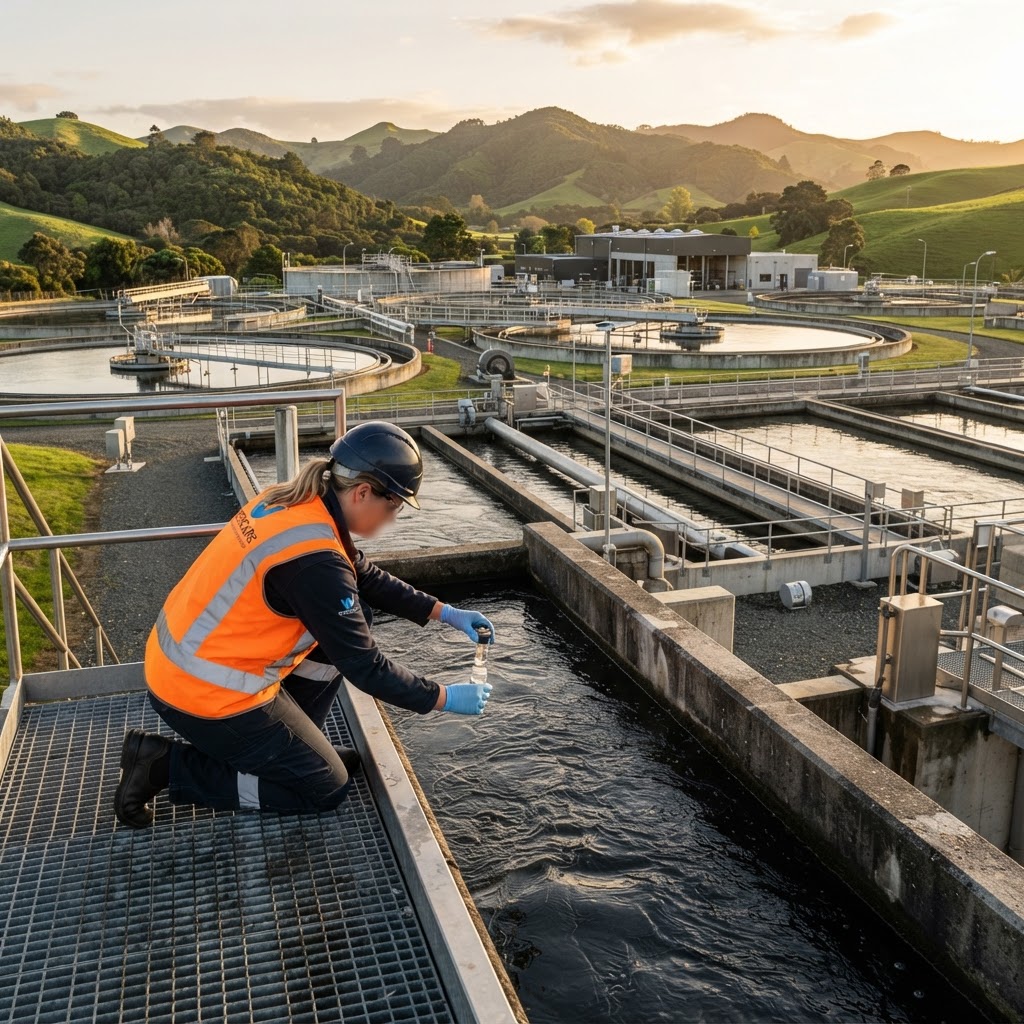
What Is Wastewater Drug Monitoring?
Wastewater drug monitoring is a public health surveillance technique that measures the concentration of drug metabolites — the chemical by-products the human body excretes after consuming a drug — in raw sewage entering treatment plants. Because methamphetamine is excreted largely unchanged, its metabolite (amphetamine) is a reliable forensic marker. When sampled consistently at the same sites over time, wastewater data reveals how much methamphetamine is being consumed in a given community, down to estimates of grams per week per 1,000 people.
Laboratory Analysis
Samples are analysed using liquid chromatography–mass spectrometry, a forensic-grade method that can detect nanogram-level concentrations of drug metabolites.
Regional Coverage
Over 40 wastewater treatment sites across New Zealand are sampled quarterly, covering roughly 80% of the population and every major region.
Trend Tracking
Comparing quarter-on-quarter and year-on-year results reveals whether regional methamphetamine consumption is rising, stable, or falling.
Why Wastewater Data Matters for Property Risk
Wastewater monitoring does not tell you that a specific property is contaminated. What it does tell you is the broader consumption pressure in a region — and methamphetamine consumption pressure is the single strongest predictor of contamination risk in the rental housing stock of that region. When consumption rises in a police district, the probability that individual rental properties test above the NZS 8510:2017 threshold of 0.08 µg/100 cm² rises in lockstep, often with a one-to-two-quarter lag.
This is why EnviroCheck pairs wastewater intelligence with on-the-ground property testing. The wastewater data tells you where and when risk is intensifying; our NZS 8510-compliant assessments tell you whether a specific property has been affected. Together, they let property owners move from reactive testing to proactive, evidence-led risk management.
The Q2 2026 Police / PHF Science Wastewater Data
New Zealand Police and PHF Science release national wastewater results each quarter. The Q2 2026 release (April–June 2026) is the most recent dataset EnviroCheck incorporates into its regional risk scoring. Nationally, methamphetamine consumption averaged 33.3 kg per week, with an exceptionally high April 2026 followed by lower levels in May and June. Northland recorded the highest Q2 rate nationally at 1,779 mg/day per 1,000 people, while Waikato — though still very high at 1,485 — decreased from its previous four-quarter average of 1,711. These figures feed directly into our Property Risk Calculator and regional landing pages. Figures represent the wastewater sites tested and must not be extrapolated to nearby untested communities.
How EnviroCheck Uses This Data
Each quarter, we ingest the latest Police wastewater results and update the regional risk indicators shown on our Wastewater Risk Map and within each regional meth testing landing page. Property owners can use this intelligence to prioritise testing schedules, set healthier tenancy boundaries, and make better-informed due-diligence decisions before purchase. Because we now test and advise only — we no longer remediate — our risk intelligence carries no conflict of interest. EnviroCheck's pioneering background in the sector reaches back to 2011, when founder Todd Sheppard pioneered methamphetamine surface-residue testing for the emerging New Zealand property-testing market.