Meth Testing NZ
Independent meth testing NZ from $249 + GST. Whether you need a meth test NZ for a pre-purchase check, rental property meth testing, or a baseline meth screen, EnviroCheck's structured three-level approach is aligned with NZS 8510:2017 and the 2026 Residential Tenancies Regulations. Book a meth test today.
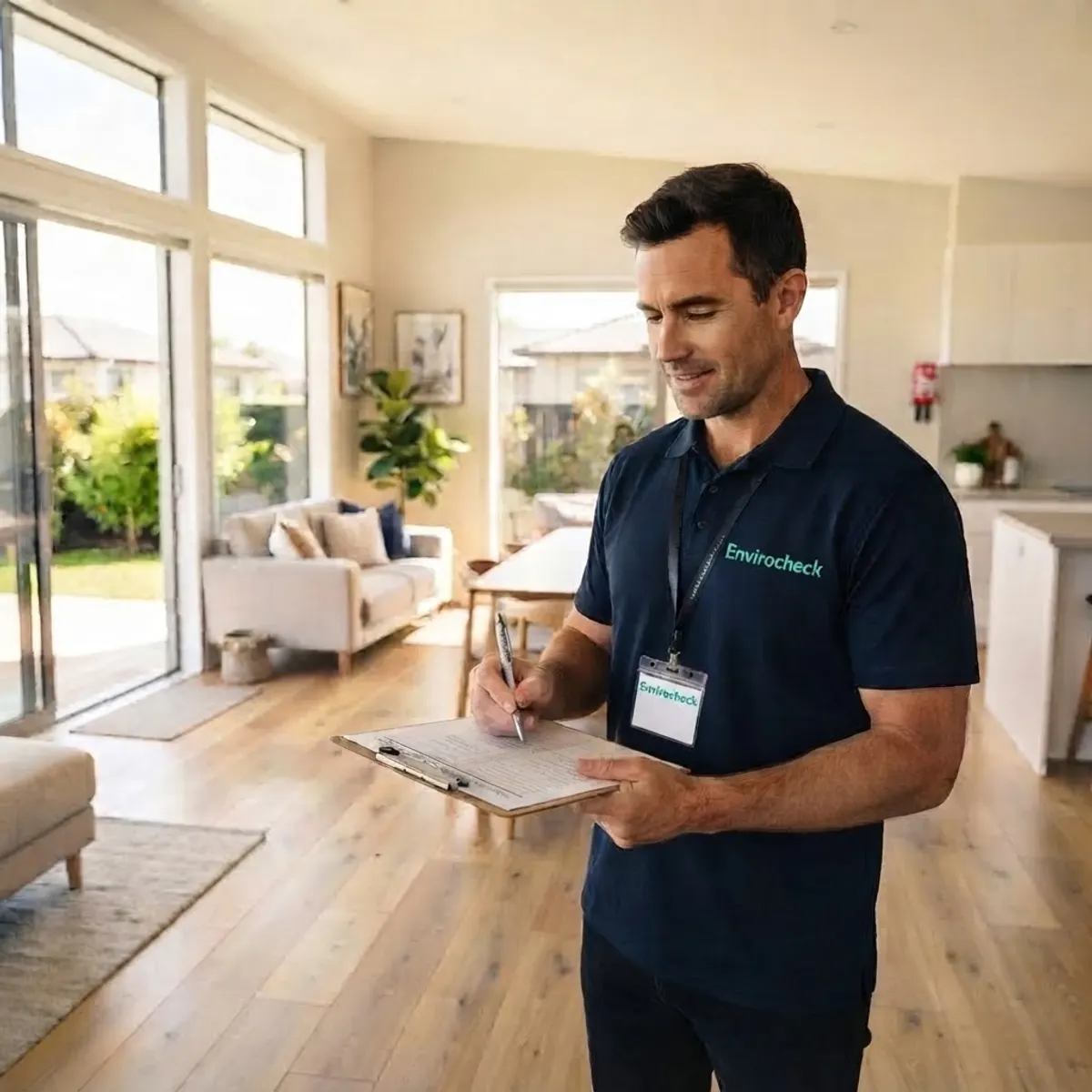
EnviroCheck provides independent meth testing across New Zealand, including dedicated Meth Testing Auckland, Meth Testing Hamilton, Meth Testing Waikato, and Bay of Plenty services with local wastewater risk context and suburb-level guidance. For landlords and property managers, our rental property meth testing page covers pre-tenancy baselines, end-of-tenancy exit testing, and the 2026 regulatory obligations. Pre-tenancy meth testing establishes the documented starting condition that every future result is compared against. For pricing, see our Meth Testing Cost NZ guide, and for pre-purchase due diligence, our Pre Purchase Meth Testing page. P testing (also known as P test or meth testing) follows the same NZS 8510:2017 methodology — EnviroCheck provides independent, conflict-free P testing across New Zealand. Every assessment is backed by IANZ-accredited laboratory analysis and delivered as a formal meth toxicology report documenting the laboratory results.
NZQA Qualified Methamphetamine Testing
Testing undertaken by assessors holding NZQA Unit Standards 30892, 30893 & 30894.
NZQA Certified Samplers
Surface-residue sampling carried out by certified samplers holding NZQA Unit Standards 30892, 30893 & 30894.
Baseline testing is just the start — MethShield® keeps protecting
EnviroCheck pioneered baseline methamphetamine testing in New Zealand, commissioning the country's first surface-residue testing programme in 2011. That same evidence-based approach underpins the MethShield Baseline Monitoring Programme — combining baseline testing, follow-up monitoring, and visible deterrence signage to support ongoing property risk management.
A single test tells you the condition at one point in time. MethShield aims to help reduce the risk of contamination between tests through visible deterrence and prevention-focused property practices.
Structured Testing Approach
Baseline Screening Assessment
An affordable starting point for understanding potential contamination risk. Designed for properties where there is no known evidence of methamphetamine manufacture and no immediate concerns indicating significant contamination.
Included in this service
Suitable for
A Baseline Screening Assessment is a screening tool intended to assist with risk identification. The assessment does not provide a formal contamination determination and should not be relied upon as a Detailed Assessment for tenancy, insurance, remediation, or regulatory purposes. Where methamphetamine residue is detected in a composite screen, individual analysis of the retained sample extracts will be required to identify affected locations — this is charged separately at an additional cost.
EnviroCheck pioneered baseline methamphetamine testing in New Zealand, and the Baseline Screening Assessment is where that approach begins. Pair your baseline result with MethShield to join our ongoing baseline monitoring and deterrence programme — establishing a documented starting condition and tracking changes over time.
Explore the MethShield ProgrammeEnhanced Screening
Greater confidence where concerns or risk factors exist. Recommended where there are indicators that methamphetamine use may have occurred, where previous results require clarification, or where more detailed information is needed from the outset.
Included in this service
Suitable for
Enhanced Screening provides more detailed information than a screening assessment but may not satisfy the requirements of a formal Detailed Assessment unless specifically scoped and reported for that purpose.
Detailed Assessment
Comprehensive investigation for formal decision-making. Undertaken when a definitive understanding of contamination levels is required — determining the presence, location, and extent of methamphetamine contamination throughout a property.
Included in this service
Suitable for
A Detailed Assessment provides the highest level of investigation and reporting and is intended for situations where formal contamination determinations and defensible decision-making are required. By arrangement.
Get a Call Back Within 30 Minutes
Leave your name and number — we'll call you back with pricing and availability. No obligation.
Laboratory Analysis Options
Depending on the purpose of your assessment, EnviroCheck uses two laboratory analysis methods. Both involve the collection of individual wipe samples by a trained technician using NIOSH 9111 sampling methodology.
Laboratory Composite Analysis
A cost-effective screening option that allows multiple individually collected samples to be screened as a laboratory composite while retaining the ability to analyse samples individually if required.
- Individual wipes collected separately
- Samples extracted separately by the laboratory
- Sub-samples combined into a laboratory composite for analysis
- Up to 10 samples per laboratory composite
- Sample extracts retained for 3 weeks
- Individual analysis available without returning to the property
- Detection limit of 0.02 µg/sample
Regulatory note: Laboratory composite analysis is an approved testing method under the Residential Tenancies (Managing Methamphetamine Contamination) Regulations 2026. EnviroCheck collects samples individually and does not use field composite sampling.
NZ Meth Contamination Limits
The Residential Tenancies (Managing Methamphetamine Contamination) Regulations 2026 came into effect on Thursday 16 April 2026. These regulations apply exclusively to rental properties governed by the Residential Tenancies Act.
Maximum Acceptable Level
At or exceeding 15 µg/100 cm², the property is considered contaminated and triggers the relevant obligations under the 2026 Regulations.
Any detected contamination — even below this threshold — can create cost, disclosure concerns, and ongoing liability for the property owner.
Maximum Inhabitable Level
A rental property is considered uninhabitable where meth residue exceeds 30 µg/100 cm². Tenants cannot lawfully occupy the property until remediation is completed and the property retested.
The Standard Was Not Replaced
The 2026 Regulations apply only to rental properties under the Residential Tenancies Act. They did not replace NZS 8510:2017, which remains the relevant New Zealand Standard for non-rental situations — including sale and purchase decisions, owner-occupied homes, commercial properties, insurance matters, vehicles (cars, boats, and motorhomes), and other risk-based property decisions.
Who Should Consider Meth Testing?
Meth testing is essential for anyone seeking clarity about the condition of a property. Because contamination is invisible and often odourless, property history cannot be reliably assessed without testing.
Home Buyers
Don't rely on a vendor's word or a visual inspection. Meth contamination is invisible — only testing gives you the evidence you need before signing anything.
Landlords & Property Managers
Your rental property is an asset and a liability. Regular testing keeps you informed, documented, and protected — before a problem becomes a crisis.
Tenants
You have a right to know what you're moving into. If you have concerns about a property's history, testing gives you a factual answer.
Insurance & Tenancy Matters
When it counts legally or financially, only a Detailed Assessment will do. Required for tenancy tribunal proceedings, insurance claims, and remediation scoping.
Meth Testing for Rental Properties
EnviroCheck meth testing starts from $249 + GST. We provide methamphetamine testing for rental properties, landlords, property managers, homeowners and property buyers. These services are available to landlords and property managers who want to establish or assess the condition of a property at key tenancy milestones.
Pre-Tenancy Meth Testing
Establish a documented baseline before a new tenant moves in. Pre-tenancy meth testing protects landlords and property managers by recording the property's condition at the start of the tenancy.
End-of-Tenancy Meth Testing
Assess the property when a tenant leaves. End-of-tenancy meth testing identifies whether contamination occurred during the tenancy and supports any Tenancy Tribunal or insurance claim.
Change-of-Tenancy Meth Testing
Combined pre- and end-of-tenancy screening at tenancy transitions. Change-of-tenancy meth testing gives property managers a clear before-and-after record for every rental property.
Looking for meth testing prices? EnviroCheck offers rental property meth testing and meth testing for landlords from $249 + GST. Property manager meth testing is also available. Contact us for a tailored quote based on your property, location and testing type.
Contamination is a Cost — At Any Level
Insurance Risk Starts Before the Threshold
Insurance risk does not begin only at a legal threshold. Any detected contamination can create cost, documentation issues, disclosure concerns, and future liability for the property owner — regardless of whether it reaches the regulatory trigger level.
Any contamination is a liability. Any contamination is a cost. These are not future problems — they begin the moment residue is detected.
Why EnviroCheck Should Interpret Your Results
Test results require expert interpretation. A number without context is not a decision — it is data. EnviroCheck's assessors understand NIOSH Method 9111 sampling methodology, NZS 8510:2017, and the 2026 Regulations, and will interpret your results in the context of the specific property, sampling locations, and risk profile.
Using a provider who both tests and remediates creates an inherent conflict of interest. EnviroCheck is an independent testing and advisory service only — our findings serve you, not a remediation outcome. EnviroCheck's industry experience reaches back to the early development of methamphetamine property testing in New Zealand.
Insurance Alert for Landlords
Insurance companies are increasingly concerned about rising meth contamination levels across New Zealand. Some insurers are reviewing — and in some cases declining — cover for properties where contamination history or elevated regional risk is identified.
Any confirmed or suspected contamination carries an ongoing risk factor. An untested property in a high-risk region may be considered an unquantified liability by insurers. Landlords are strongly advised to maintain documented testing records to protect their insurance eligibility and reduce exposure to uninsured remediation costs.
NIOSH Method 9111
All Detailed Assessments are carried out using NIOSH Method 9111 — the internationally recognised sampling methodology for methamphetamine surface wipe testing. This method is required under NZS 8510:2017 for formal contamination determinations and is the method recognised under the Standard for tenancy tribunal, insurance, and decontamination scope purposes.
A meth screening assessment (Baseline or Enhanced Screening) is the affordable starting point for risk identification. Where a screen detects residue, or where formal evidence is required, a detailed meth assessment — also called detailed meth testing — uses discrete meth sampling (individual meth sampling of each surface) to pinpoint exactly which rooms and surfaces are contaminated and at what concentration. This room-by-room approach is what makes a Detailed Assessment defensible in tribunal, insurance, and court proceedings.
Independent Testing vs Remediation-Linked Testing
When the same company that tests your property also sells the remediation, the test results and the remediation quote are not independent. EnviroCheck tests and advises only — so the findings answer to you, not to a remediation invoice. Here is how the two models compare.
Comparison | EnviroCheck — Independent | Remediation-Linked Testing |
|---|---|---|
| Business model | Test and advise only — no remediation work, no remediation revenue | Tests, then sells and performs the remediation the test results justify |
| Financial incentive | None. Findings have no link to any downstream billable work | Profits from finding contamination — the more that is found, the more is earned |
| Conflict of interest | Structurally removed by design — independence is the business model | Inherent — the same company profits from the problem it identifies |
| Who the findings serve | You — the property owner, buyer, or manager making the decision | The testing company's remediation pipeline |
| Result interpretation | Evidence-only, interpreted against NZS 8510:2017 and the 2026 Regulations | May be framed to support a remediation scope and quote |
| Sampling methodology | NIOSH Method 9111, NZS 8510:2017 compliant on every Detailed Assessment | Variable — methodology can be shaped to support remediation outcomes |
| Scope of involvement | Testing and advisory — then steps aside | Tests → quotes remediation → performs remediation → retests to clear |
| Report objectivity | A factual record you can rely on for insurance, tribunal, and sale decisions | A report that also serves as a remediation sales document |
Business model
EnviroCheck — Independent
Test and advise only — no remediation work, no remediation revenue
Remediation-Linked
Tests, then sells and performs the remediation the test results justify
Financial incentive
EnviroCheck — Independent
None. Findings have no link to any downstream billable work
Remediation-Linked
Profits from finding contamination — the more that is found, the more is earned
Conflict of interest
EnviroCheck — Independent
Structurally removed by design — independence is the business model
Remediation-Linked
Inherent — the same company profits from the problem it identifies
Who the findings serve
EnviroCheck — Independent
You — the property owner, buyer, or manager making the decision
Remediation-Linked
The testing company's remediation pipeline
Result interpretation
EnviroCheck — Independent
Evidence-only, interpreted against NZS 8510:2017 and the 2026 Regulations
Remediation-Linked
May be framed to support a remediation scope and quote
Sampling methodology
EnviroCheck — Independent
NIOSH Method 9111, NZS 8510:2017 compliant on every Detailed Assessment
Remediation-Linked
Variable — methodology can be shaped to support remediation outcomes
Scope of involvement
EnviroCheck — Independent
Testing and advisory — then steps aside
Remediation-Linked
Tests → quotes remediation → performs remediation → retests to clear
Report objectivity
EnviroCheck — Independent
A factual record you can rely on for insurance, tribunal, and sale decisions
Remediation-Linked
A report that also serves as a remediation sales document
The bottom line: A testing company that also remediates answers to two masters — the evidence and its own revenue. EnviroCheck answers to one. That structural separation is why our reports carry clarity a remediation-linked tester's report cannot match.
Pioneering Baseline Meth Testing in New Zealand
EnviroCheck founder Todd Sheppard was an early pioneer of New Zealand's property methamphetamine-testing industry, with involvement dating back to 2011. He developed the baseline meth testing approach — testing a property at the start of a tenancy or monitoring period and retaining that result as the property's documented starting condition, so subsequent testing can identify changes in methamphetamine residue over time. That early baseline concept has continued to evolve into today's MethShield deterrence and monitoring system.
Read the full historyWe Detect to Protect™
Independent testing. Safer properties.
Is Meth Contamination Dangerous to Health?
The health effects of low-level meth surface contamination remain a subject of ongoing scientific debate. At this stage, the evidence is not conclusive — and New Zealand's regulatory approach reflects that uncertainty.
The Science Is Still Evolving
Whether residual meth contamination at low levels poses a direct health risk to occupants is currently unknown. No definitive causal link between low-level surface contamination and adverse health outcomes has been established in peer-reviewed literature.
What is clear is that high-level contamination — associated with active manufacturing — presents serious risks. The debate centres on properties used for consumption, where residue levels are typically far lower.
NZ vs. International Limits
For rental properties, the 2026 Residential Tenancies regulations set a contamination threshold of 15 µg/100 cm² — significantly higher than the 1.5 µg/100 cm² decontamination threshold under NZS 8510:2017 that applies to non-rental situations (property sales, insurance, and vehicles).
This tenfold difference reflects differing interpretations of the available science and risk appetite. Critics argue NZ's higher threshold underprotects occupants; supporters say it better reflects actual health evidence and reduces unnecessary remediation costs.
EnviroCheck's position: Regardless of where the science lands, untested properties carry unquantified risk — to occupants, to insurers, and to property owners. Independent, evidence-based testing provides the factual foundation for informed decision-making, whatever the regulatory threshold. If you already have results you're unsure about, our guide to understanding meth test results explains how to read a methamphetamine laboratory report.
Meth Testing in Your Area
EnviroCheck provides independent, NZS 8510:2017 compliant meth testing across New Zealand. Book an assessment in your area:
Frequently Asked Questions
Practical answers to the questions we hear most from property buyers, landlords, and tenants across New Zealand.
Questions You Should Always Ask
Before accepting any meth test result, ask your testing provider:
Meth Testing Across New Zealand
Find meth testing services in your region. Each area page includes local Q2 2026 wastewater risk context and guidance for property owners and managers.
Meth Testing by City
Find meth testing in your city. Each city page includes local risk context drawn from the relevant Q2 2026 police-district wastewater data, plus suburbs covered and guidance for property owners and managers.
Meth Testing in Key NZ Regions
EnviroCheck provides independent methamphetamine testing across New Zealand's highest-risk districts. In the Waikato, our meth testing Waikato page covers Q2 2026 wastewater data, regional risk guidance and pricing from $249 + GST. For testing in the region's largest centre, see our meth testing Hamilton guide — and landlords can read our property meth testing Hamilton page for pre-tenancy and exit screening specific to rental properties.
In the upper North Island, meth testing Auckland covers the Tāmaki Makaurau district — New Zealand's largest rental market, with per-capita consumption trending upward in Q2 2026. Landlords and property managers can arrange rental property meth testing in Auckland with pre-tenancy baseline screening that documents condition at change-of-tenancy. For the wider Waikato region, our property meth testing Waikato service covers Cambridge, Te Awamutu, Morrinsville, Matamata, Tokoroa, Huntly and Ngaruawahia.
All testing is NZS 8510:2017 compliant and conducted by independent EnviroCheck assessors. View all testing locations or request a quote.
Meth Testing Services for Every Situation
Whatever your property type or stage in the testing cycle, EnviroCheck provides independent, NZS 8510:2017-compliant testing — testing only, with no decontamination conflict of interest.
Property Meth Testing NZ
Professional property meth testing for landlords, buyers and sellers.
Rental Property Meth Testing
Pre-tenancy baselines and exit screening for tenancy disputes.
Pre-Tenancy Meth Testing
Baseline testing before a tenant moves in.
End-of-Tenancy Meth Testing
Exit testing to establish liability when a tenant leaves.
Pre Purchase Meth Testing
Test before settlement — from $249 + GST.
Meth Testing Cost NZ
How much does meth testing cost in New Zealand?
Meth Testing Hamilton
Local meth testing in Hamilton, Waikato.
Meth Testing Waikato
Regional meth testing across the Waikato.
Meth Testing Auckland
Local meth testing across Auckland.
EnviroCheck on Newstalk ZB
Todd Sheppard, CEO of EnviroCheck, was interviewed by Newstalk ZB about the realities of methamphetamine testing in New Zealand. Read more on our Media page or learn about Todd Sheppard.
Looking for a meth surface screening kit? View our testing options →
Qualified Methamphetamine Testing New Zealand
Testing undertaken by assessors holding NZQA Unit Standards 30892, 30893 & 30894. Every EnviroCheck assessment is carried out by a professional meth testing NZ assessor using independent laboratory analysis and defensible reporting.
NZQA Qualified
Assessors hold NZQA Unit Standards 30892, 30893 & 30894 for methamphetamine testing.
Independent Laboratory Analysis
Samples analysed by accredited independent laboratories — no in-house bias.
Professional Reporting
Clear, defensible documentation suitable for tenancy, legal and insurance purposes.
Testing Across New Zealand
Independent methamphetamine testing coverage from Northland to Southland.
EnviroCheck Forensics Ltd — Methamphetamine assessment undertaken by an assessor holding NZQA Unit Standards 30892, 30893 and 30894.