Meth Testing to Protect Your Holiday Home
Short-term rentals carry a higher contamination risk than any other property type — dozens of unknown guests each year, and you're not there to watch. Independent screening keeps your property, your reviews, and your booking income protected.
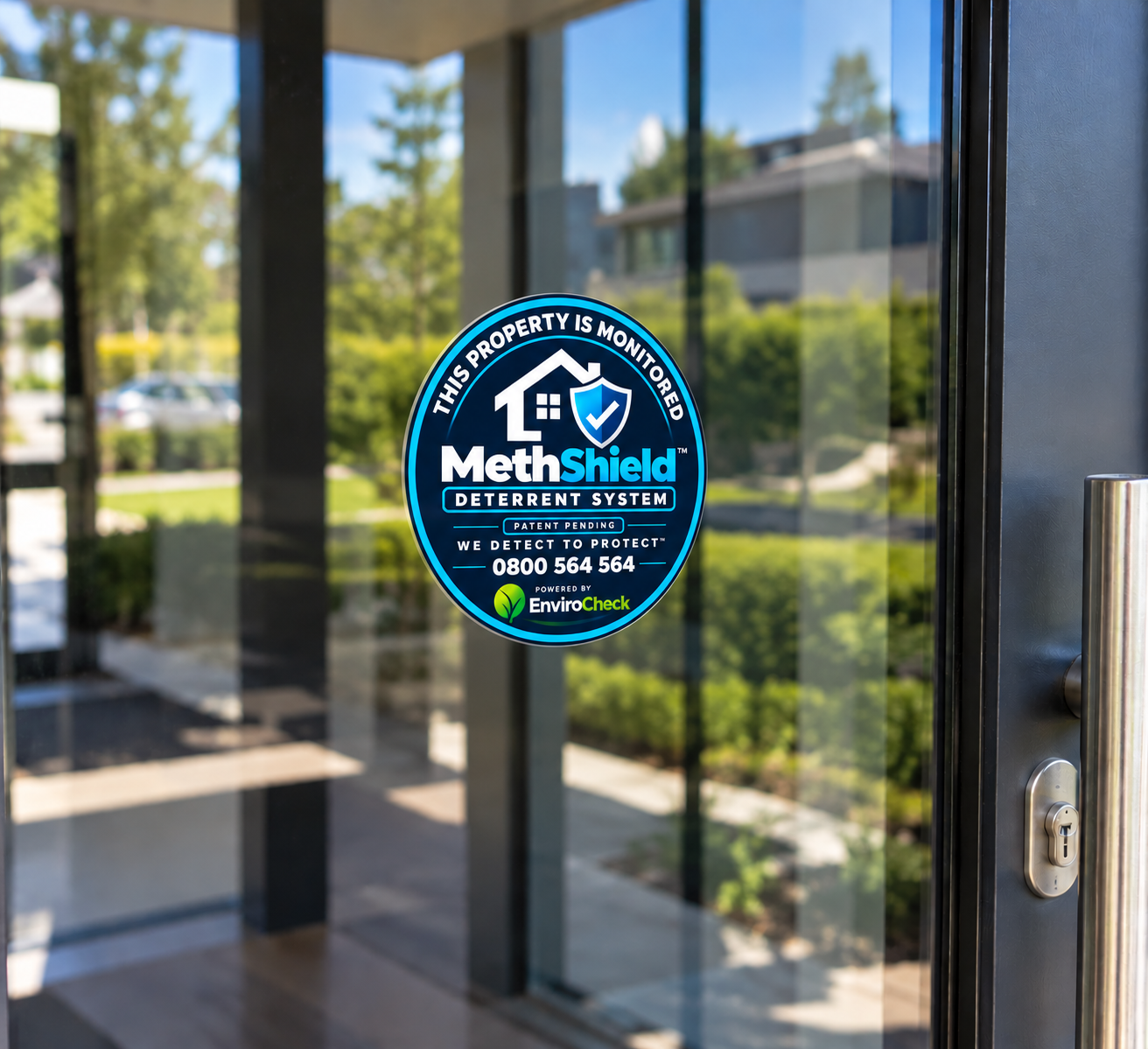
A sign guests see
Put a MethShield Label on the Door, Not Just a Test in a Drawer
A single between-guest screen tells you the property is clean today. MethShield turns that one-off test into an ongoing deterrence and monitoring programme built for Airbnb, Bookabach, B&B and boutique holiday-home operators. A visible MethShield notice on the door tells every guest the property is actively watched — a proven disincentive to risky behaviour — while regular testing builds a running record you can hand to an insurer or platform if a guest ever causes a problem.
Explore the MethShield ProgrammeMonthly or bimonthly checks
A light-touch screen on a fixed cadence keeps contamination levels tracked over time, not just at a single point.
Deterrence that works
Visible MethShield participation signals to guests that the property is actively monitored — a proven disincentive to risky behaviour.
A documented history
A running test record strengthens insurance claims, platform disputes, and recovery from the guest responsible.
Airbnb is a registered trademark of Airbnb, Inc. Bookabach is a trademark of its respective owner. EnviroCheck and MethShield are independent services and are not affiliated with, endorsed by, or sponsored by Airbnb, Inc. or any booking platform.
Why Holiday Homes Are Different
A long-term tenancy has one or two tenants a year. A busy Airbnb or holiday home might host 50 or more different guests — each one a stranger with no accountability to you after they check out. When contamination happens, there's often no obvious sign, no report, and no way to know which guest caused it.
By the time a future guest notices something, or a test is done for another reason, the contamination is yours to deal with — and the guest who caused it is long gone. Baseline and between-guest screening is how short-stay hosts stay ahead of that risk.
The Short-Stay Risk Profile
High Guest Turnover
Short-term rentals host dozens of different guests each year — far more than a standard tenancy. Every new guest is an unknown, and each turnover is an opportunity for contamination that you won't see and they won't report.
You're Not Always On-Site
Unlike a long-term tenancy where you or a property manager can keep an eye on things, a holiday home may sit unattended between bookings. By the time a problem is noticed, contamination may have spread across multiple surfaces and rooms.
Your Reputation Is on the Line
A single guest complaint or a positive test discovered by a future guest can damage your reviews, your booking pipeline, and your listing's standing on platforms like Airbnb and Bookabach. Protecting the property protects the income.
Three Steps to Host With Confidence
Establish a Baseline
Before you list — or right now, between guests — a baseline screen documents the property's contamination status. This is your reference point: if a future test comes back positive, you can show the contamination occurred during a guest's stay, not before.
Screen Between Guest Cycles
Periodic screening after high-turnover periods (peak summer, school holidays, long weekends) catches issues early — before the next guest arrives and before contamination has time to spread. Many hosts build this into their turnover cleaning routine.
Document for Insurance & Platforms
An independent EnviroCheck report gives you evidence your property was clean before a guest's stay. That documentation supports insurance claims, platform dispute resolution, and damage recovery from the responsible guest.
Rapid Kits Between Guests, a Lab Test Every 6–12 Months
For most boutique holiday homes and B&Bs, the smartest cadence is a light-touch screen between guest cycles and a deeper laboratory check once every six to twelve months. Rapid DIY meth test kits give you a fast, affordable read on the property's condition after high-turnover periods — peak summer, long weekends, school holidays — so you can act before the next guest arrives. Then, every six months to a year, a certified lab-based test across the property confirms what the rapid screens have been telling you and creates a defensible record for insurance, platforms, and your own peace of mind.
Between guests — rapid DIY kits
Run a rapid meth test kit after busy turnover periods. Quick, low-cost, and easy to fold into your changeover clean — it flags anything that needs a closer look before the next booking.
Explore DIY testing kitsEvery 6–12 months — lab-based test
A certified lab-based test across the property gives you a verified snapshot — defensible evidence for insurance, platforms, and your own reassurance that the rapid screens are telling the full story.
See lab-based testing optionsThe Bottom Line for Hosts
Your holiday home is an income asset, and every guest is a variable you can't control. A baseline screen and periodic between-guest testing is a small cost relative to the income the property earns — and it's the only reliable way to know the property is clean before the next guest walks in. Screen first, host with confidence. The company's history in methamphetamine property testing reaches back to 2011, when founder Todd Sheppard pioneered surface-residue testing for the emerging New Zealand property-testing market.