Field Alert: Needles & Syringes
Needles and syringes are being increasingly observed during property assessments across New Zealand. If encountered:
- Do not touch or attempt to handle — contact local authorities immediately
- Photograph location and surroundings for documentation
- Restrict access to the affected area until professional guidance is received
- Document the date, time, and specific location of the discovery
About this resource
This page is an awareness resource. It does not constitute occupational health and safety advice, personal safety training, or a certified risk assessment procedure. It does not guarantee that any property is safe to enter. Our history in the industry reaches back to 2011, when founder Todd Sheppard pioneered methamphetamine surface-residue testing for the emerging New Zealand property-testing market. Property managers can arrange rental property meth testing or book a meth test in Auckland — testing is available anywhere in New Zealand. Property owners, managers, and contractors should undertake their own risk assessments in accordance with applicable legislation and professional obligations. Where genuine safety concerns exist, professional advice should be sought.
What the First Person Through the Door May Encounter
The First Person Through the Door Carries the Greatest Unknown Risk
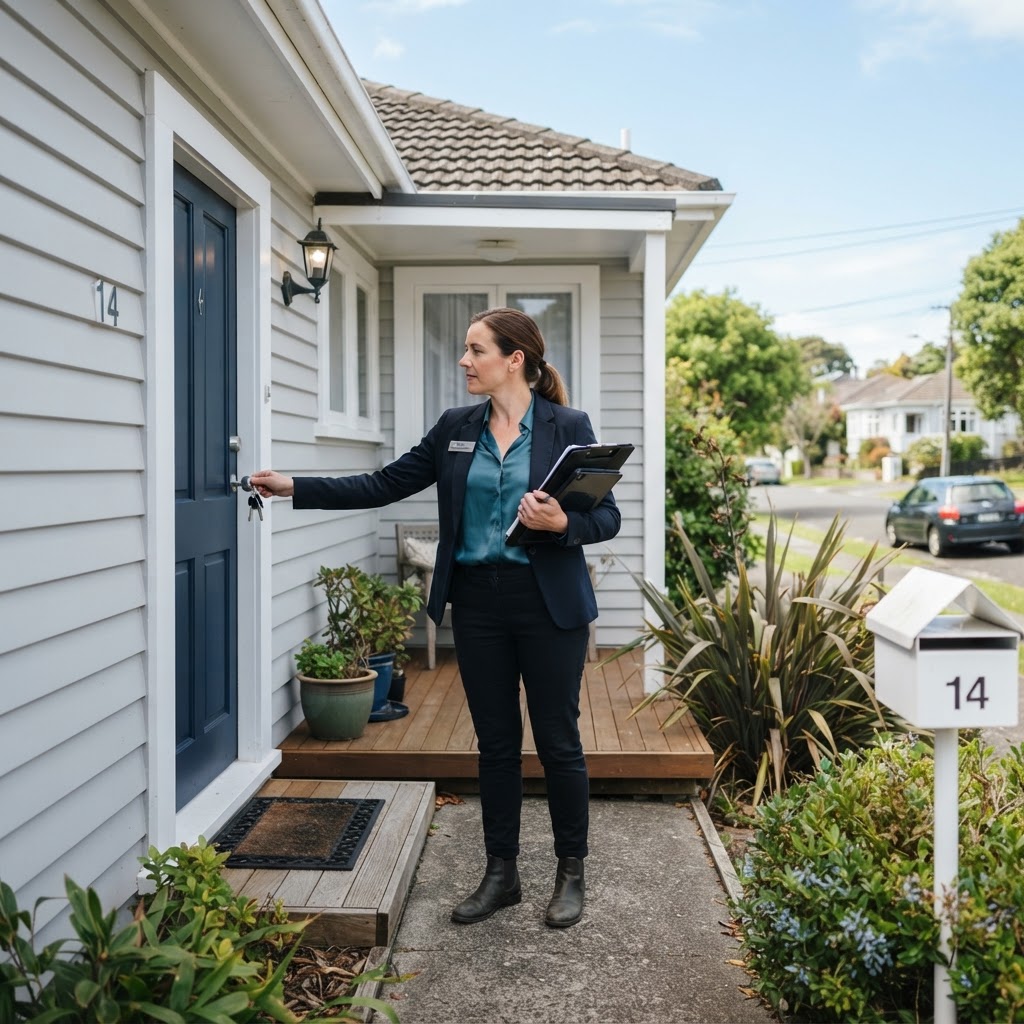
When a tenancy ends, the first person to enter the property — often a property manager, owner, contractor, or cleaner — is also the first person to encounter whatever condition the property is in. This may include contamination, hazardous materials, structural damage, or indicators of unlawful activity. That first visit happens before any professional assessment, and often before anyone has a clear picture of what occurred during the tenancy.
Why Property Conditions Can Change Between Visits
A property that presented well at the last inspection may present very differently at the end of a tenancy — or on return after a vacancy period. Methamphetamine contamination can occur in a relatively short period. Structural damage, chemical use, and occupancy by unauthorised persons can all happen between inspection intervals. Understanding that property conditions are not static is part of informed property management awareness.
Properties Believed Vacant May Not Be
One of the more significant risks for first arrivals is the gap between expected and actual occupancy. Properties that were vacated may have been reoccupied — either by former tenants who retained access, or by unauthorised persons. Burial Truth documents multiple cases where properties believed to be vacant had in fact been reoccupied between departure and handover. Indicators of recent activity — fresh rubbish, warmth, personal items — are worth noting before or during entry.
Why Documentation Before, During, and After Entry Matters
Documentation of property condition at the point of first entry after a tenancy is one of the most practically valuable records a property owner or manager can maintain. It establishes a baseline for liability purposes, provides evidence for any contamination or damage assessment, and creates a timestamped record that may be significant if issues emerge later. The absence of this documentation can create significant practical and legal disadvantage.
What an Unknown Property May Contain
The following describes categories of risk that may be present at a property — not to suggest they are likely, but to ensure that those who attend properties regularly are aware that they exist.
Methamphetamine Residue
Methamphetamine residue cannot be identified by sight. It may be present on walls, ceilings, ventilation systems, soft furnishings, and surfaces even when a property appears clean and well maintained. Standard cleaning does not remove residue.
Chemical Substances
Properties may contain unknown chemical substances including solvents, acids, fuels, or residues associated with manufacturing activity. These may be stored in unlabelled containers, concealed in wall or ceiling cavities, or present as residue on surfaces.
Biological Contaminants
Biological matter including mould, bodily fluids, animal waste, and sharps may be present within properties — particularly those that have been vacant, poorly maintained, or subject to heavy occupancy.
Structural Conditions
Unapproved alterations, damaged flooring, weakened structural elements, or modified electrical and gas systems may be present without obvious external indication. Properties that have been subject to manufacturing activity may have had walls, floors, or systems altered.
Occupancy Status
A property believed to be vacant may not be. Unauthorised occupants may be present, may have recently been present, or may return. This is particularly relevant for properties that have been vacant for an extended period or have changed hands without a comprehensive inspection.
Drug Activity Indicators
Evidence of former drug use or manufacturing activity may include unusual staining, chemical odours, modified ventilation, chemical storage containers, foil and smoking materials, or structural modifications inconsistent with normal residential use.
What to Observe
Awareness of what to observe — without drawing conclusions — is part of informed property inspection practice. These are observations, not diagnoses.
Before Entering
- Observe the external condition of the property — unusual modifications, covered windows, excessive security, or signs of activity inconsistent with expected occupancy.
- Note any unusual odours detectable before entry — chemical, solvent, or strong masking smells.
- Check whether the property appears to be vacant as expected — evidence of recent activity, vehicles, or recent occupancy may indicate the property is not unoccupied.
- Note the condition of common access points — whether locks, doors, or windows show signs of modification or forced entry.
On Arrival
- Conditions inside a property may be significantly different from what was expected based on previous inspections or property records.
- Strong chemical or unusual odours on entry may indicate the presence of substances that warrant further investigation before proceeding.
- Unexplained modifications to the property — sealed vents, unusual electrical arrangements, structural alterations — may indicate non-standard use.
- The presence of personal property, indications of recent occupation, or evidence of activity in a supposedly vacant property changes the nature of what you are entering.
Documentation
- Observations made during a property visit — including anything unexpected or unusual — are more useful when documented at the time rather than recalled later.
- Photographs of unusual conditions, modifications, or indicators create a verifiable record that supports future decision making.
- When something unexpected is found at a property, the date, time, and specific nature of the observation are all relevant to any subsequent assessment or investigation.
- A property visit record that documents 'nothing unusual observed' is itself a useful baseline document for future comparison.
Five Indicators Worth Noting During Any Property Inspection
Not a diagnostic checklist. Not a compliance requirement. Simply five things that experienced property professionals observe — as awareness, not as evidence. If you later receive a laboratory report, our guide to understanding meth test results can help you interpret it.
- 1Unusual chemical, solvent, or masking odours — particularly concentrated in specific areas
- 2Ventilation modifications — systems blocked, sealed, redirected, or removed
- 3Windows permanently covered — beyond standard curtains or blinds
- 4Unknown chemical containers — unlabelled, unusual, or out of place
- 5Evidence of heavy indoor smoking, staining, or residue on walls and ceilings
Related: Trace & Alert© — Information Management
Property history awareness, baseline documentation, and inspection records are the information management tools that sit alongside site awareness. Visit Trace & Alert© for more on why documentation gaps create risk.
View Trace & Alert© →This page is an awareness resource only. Nothing here constitutes personal safety advice, occupational health guidance, security training, or a recommendation about any specific property, situation, or person. Envirocheck accepts no responsibility for decisions made based on this content. Where genuine safety or health concerns exist at a property, seek professional advice and contact relevant authorities.