NZQA Certified Samplers
Surface-residue sampling carried out by certified samplers holding NZQA Unit Standards 30892, 30893 & 30894.
Meth testing a house is a physical sampling exercise followed by a laboratory analysis — not a device reading taken on the doorstep. An assessor attends the property, collects surface wipe samples from set locations through the house, records where each one came from, and the samples are analysed for methamphetamine residue. What you receive back is a record of the house at that moment. Here is what that involves for a typical New Zealand home, and where it differs from testing a rental or a property you are buying, which we cover on the property meth testing page.
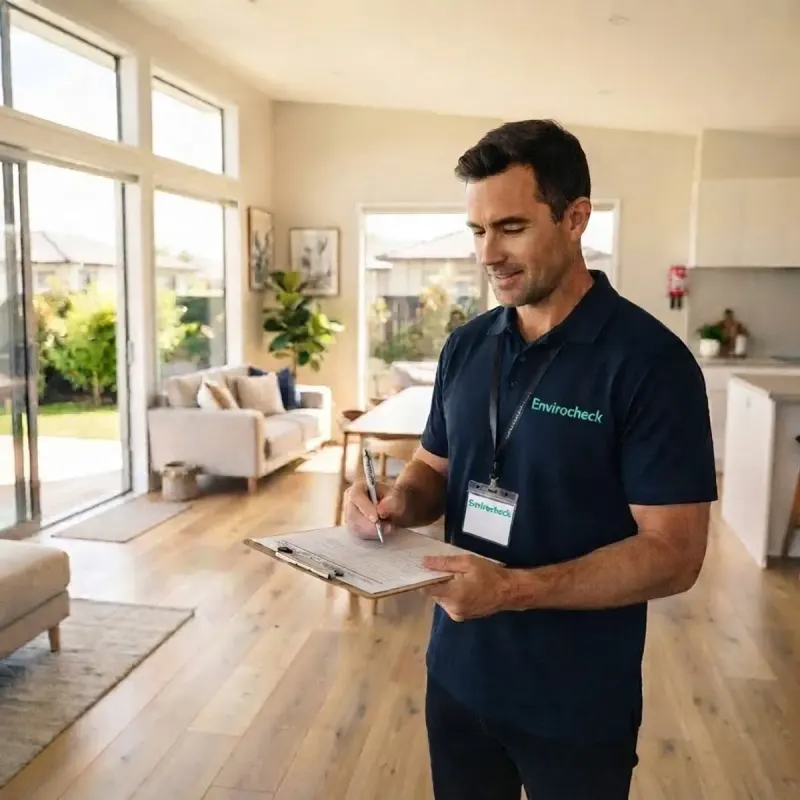
What happens on the day
- Walkthrough. The assessor walks the house with you or the occupant, confirms which rooms are in scope and checks access to ceilings, garages and any outbuildings.
- Sampling. Surface wipe samples are collected from the standard locations using NIOSH Method 9111 technique. Each sample is individually bagged and labelled, and each location is photographed.
- Laboratory analysis. Samples go to an IANZ-accredited laboratory. Nothing is interpreted on site, because a handheld device cannot quantify what is on the surface.
- Report. You receive the laboratory result for each sample, the location it came from, and how it compares with the threshold that applies to your house.
Which parts of a house get tested
Sampling is not random. Locations are chosen because residue accumulates there and because a result from that spot tells you something useful about the room:
Bedrooms
Every bedroom is sampled — the main bedroom, spare rooms and any sleepout or converted garage used as a bedroom. Bedrooms are where use most often concentrates, and each one is recorded separately so a result can be traced to a room.
Living areas
Lounge, family room and any second living space. High-touch and high-surface-area locations are prioritised: walls at hand height, window sills and surfaces near where people sit.
Kitchen
Benches, splashback areas and extractor surroundings. Kitchens also matter because cooking surfaces and general household residue can affect what a sample picks up.
Bathroom and laundry
Vanity surrounds, walls and laundry surfaces. Warm, enclosed, frequently cleaned spaces can carry residue that ordinary cleaning does not remove from ceilings and cornices.
Hallways and entry
Circulation spaces connect every room, which makes them useful as an early indicator in a screening assessment.
Ceilings, cornices and cavities
Where the assessment level calls for it, higher and harder-to-clean surfaces are sampled, including ceiling cavities, which hold residue long after a room has been repainted.
For more on how a sample is taken and recorded, see our sampling technique page.
Screening or detailed — which does a house need?
A Baseline Screening Assessment from $249 + GST combines samples from across the house into a single laboratory analysis. It answers one question: is methamphetamine residue present above the reporting level in this house? It does not tell you which room. That is usually enough for a first look, a routine check or a pre-tenancy baseline.
A Detailed Assessment analyses each sample separately, so the report shows concentration room by room. That is the level required whenever the result has to stand behind something — an insurance claim, a Tenancy Tribunal hearing, a settlement condition or a decontamination scope. Our composite meth testing guide explains the difference in sampling terms.
When it makes sense to test a house
- You have just bought or moved into a house and want to know what you are living in.
- A previous occupant's history is unclear — a rental, an inherited property or a house that sat empty.
- You have noticed signs that concern you: chemical odour, unusual staining, blocked vents or unexplained damage.
- You are selling and want a documented condition before the house goes on the market.
- You are buying and need a result before a condition or settlement date expires.
- A tenancy is ending and you want the condition of the house recorded before the next tenant moves in.
- Decontamination has been completed and you need independent verification that the house is clear.
Reading the result
A house result is only meaningful against a threshold. For non-rental houses the reference is NZS 8510:2017, for which 1.5 µg/100 cm² is the clearance benchmark. Rental houses are assessed against the 2026 Residential Tenancies regulations. The report states which standard applies and where each sample sits against it — a number in isolation is not an answer. Our guides to contamination thresholds and understanding your report cover interpretation in detail.
What a house test costs
Testing a house starts from $249 + GST. The final figure depends on the assessment level, the size of the house and the number of samples required — larger or multi-level homes need more sampling locations to give the same coverage. Our meth testing cost guide breaks down what each level includes.
To book a house test, contact EnviroCheck or call 0800 564 564. Tell us the address, the number of bedrooms and whether the house is owner-occupied or tenanted, and we will confirm the level of assessment that fits.