Why Meth Sampling Technique Matters
A laboratory result is only as reliable as the sample collected in the field. Methamphetamine surface testing is intended to assess residue on a defined surface area. If sampling damages paint or collects material beneath the surface, the result may represent something different from ordinary surface residue.
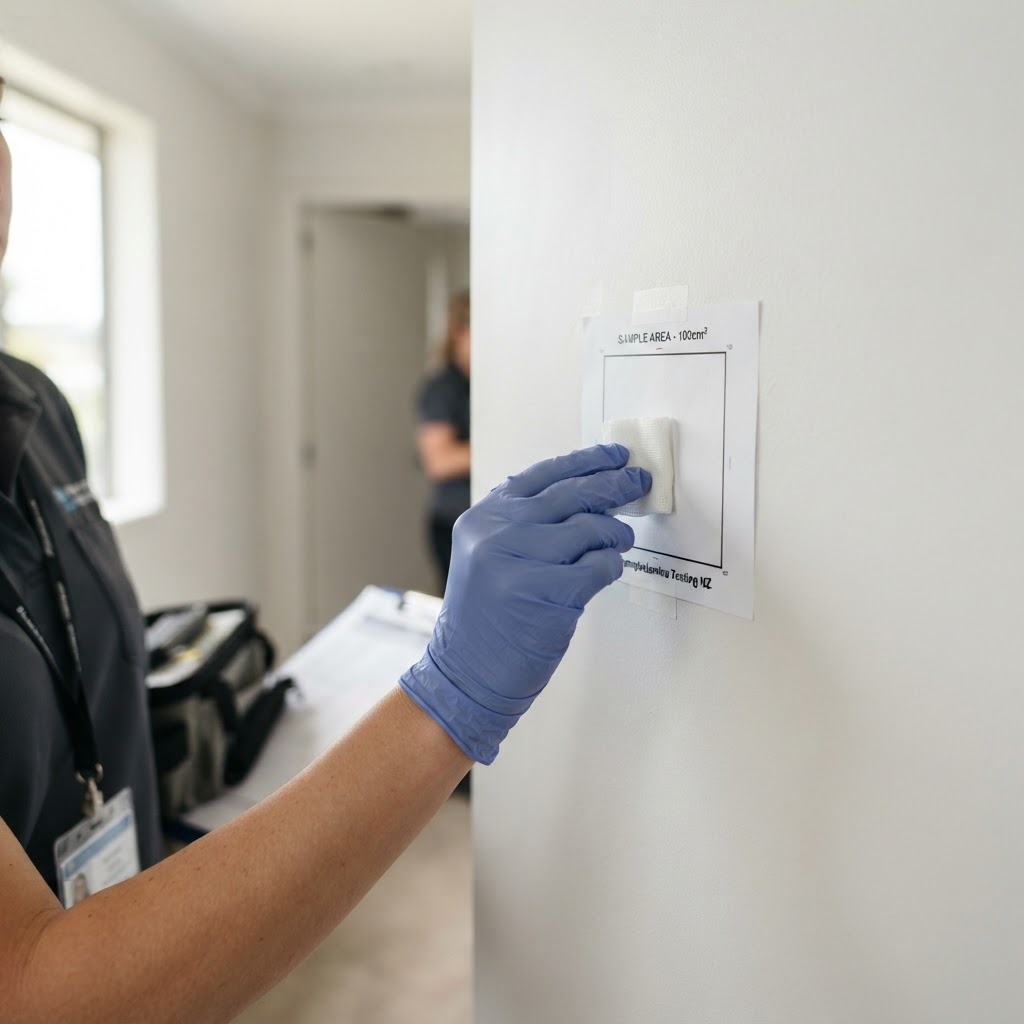
Surface Sampling and Sub-Paint Sampling Are Not the Same
Sub-paint sampling is not automatically a problem. There are two different purposes for methamphetamine sampling, and the key issue is documentation — not the method itself.
1. Standard Surface Sampling
Used to assess methamphetamine residue present on the accessible surface. The sample is collected from a defined surface area so the laboratory result reflects ordinary surface residue.
2. Intentional Sub-Paint Sampling
May be used when specifically investigating whether historic contamination exists beneath paint or another coating. When subsurface material is intentionally collected, the sampling method and surface condition should be clearly recorded on the chain-of-custody or laboratory submission form.
“The laboratory can only interpret a sample using the information supplied with it. When subsurface material is intentionally collected, that fact should travel with the sample from the field to the final report.”
How Sampling Context Travels — or Gets Lost
A sample moves through a chain: Property → Chain of Custody → Laboratory → Report → Interpretation. Whether the sampling context survives that journey depends on what is recorded at the start.
Correctly Documented Investigation
Intentional sub-paint sample taken
Recorded on chain of custody as sub-paint
Laboratory knows the sample type
Report retains the sampling context
Appropriate interpretation
Context Not Recorded
Surface breached during sampling
Not identified on chain of custody
Laboratory receives sample without field context
Surface vs subsurface distinction may be lost
Potential interpretation problem
What EnviroCheck Records
To preserve sampling context from the wall to the final report, EnviroCheck documents the following at every sample location.
Sample location
Where in the property each sample was collected.
Surface type
The material tested — painted wall, vinyl, timber, etc.
Surface condition
Whether the surface was intact, worn, or compromised.
Coating intact or breached
Whether paint or another coating was broken during sampling.
Sample photographs
Photographs of sampling locations where appropriate.
Sample identification
A unique sample number tied to the chain of custody.
Chain-of-custody
Laboratory submission and custody documentation.
Sample type
Whether the sample was standard surface or intentional sub-paint/subsurface.
Why the Laboratory Matters
Accredited laboratories analyse the material submitted to them. The field information accompanying the sample — including whether it is a standard surface sample or an intentional subsurface sample — is therefore important to later interpretation.
This is why EnviroCheck distinguishes field sampling responsibility from laboratory analysis. The laboratory’s role is to analyse what it receives; our role is to ensure the sample and its context are correctly documented before it leaves the property. When both are done well, the final report can be interpreted with confidence.
When Might Sub-Paint Testing Be Useful?
Intentional sub-paint sampling may be appropriate in a targeted investigation where there is reason to examine historic contamination beneath a later paint or coating layer. In that situation, collecting a subsurface sample can help establish whether contamination existed before the surface was recoated.
“A sub-paint result should not simply be presented as though it were an ordinary surface-residue result. The sampling method needs to remain clear in the laboratory and assessment record.”
Meth Testing Questions
Straight answers to the questions property owners and managers ask most.