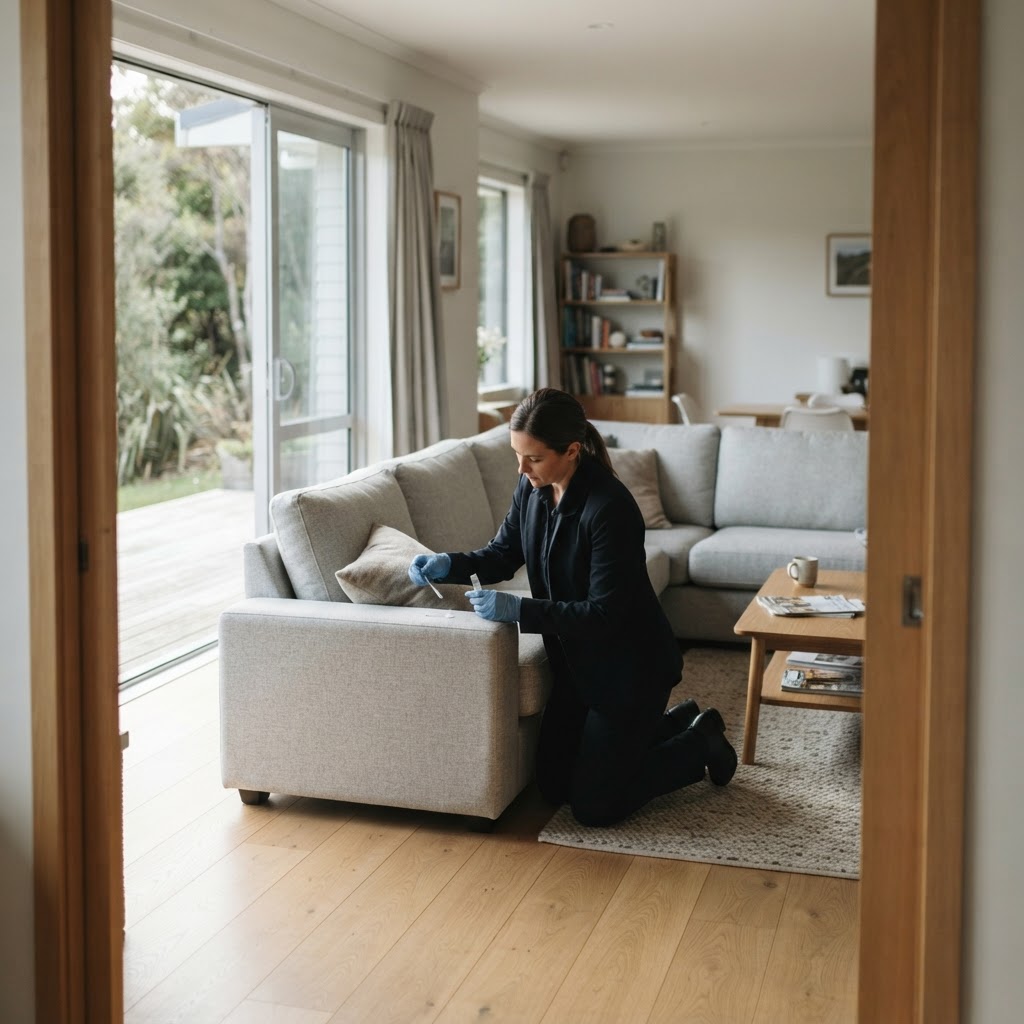
EnviroCheck is raising the alarm over a rise in methamphetamine contamination detected in New Zealand Airbnb and holiday homes. As short-stay rental volumes grow, the company says the contamination risk in these properties is being underestimated — and that hosts are often the last to know.
The warning follows a noticeable increase in positive Airbnb and holiday home meth test results from short-stay and holiday rental properties, particularly those with high guest turnover through peak summer and long-weekend periods. EnviroCheck is urging hosts to treat meth screening as a routine part of their turnover cleaning — not a one-off check reserved for long-term tenancies. The cost of an Airbnb meth contamination clean, and the insurance implications for hosts who cannot prove a clean baseline, make routine short-stay rental meth screening a small investment against the income the property earns.
Why Short-Stay Is a Different Risk
A standard long-term tenancy has one or two tenants a year. A busy Airbnb or holiday home can host 50 or more different guests in the same period — each one a stranger with no accountability to the owner after they check out. When contamination happens, there is often no obvious sign, no report, and no way to know which guest caused it.
By the time a future guest notices something, or a test is done for another reason, the contamination has spread across multiple surfaces and rooms — and the guest responsible is long gone. The full guidance for hosts is on the EnviroCheck Airbnb & holiday home screening page.
Three Drivers of the Rising Risk
High Guest Turnover
Dozens of unknown guests each year — every new guest is a variable the host cannot control, and each turnover is an opportunity for contamination that goes unseen and unreported.
Unattended Between Bookings
Unlike a long-term tenancy, a holiday home may sit empty between guests. By the time a problem is noticed, contamination has had time to spread across multiple surfaces and rooms.
Reputation and Income on the Line
A single guest complaint or a positive test found by a future guest can damage reviews, the booking pipeline, and a listing's standing on Airbnb and Bookabach. Protecting the property protects the income.
What EnviroCheck Is Asking Hosts to Do
EnviroCheck is encouraging short-stay hosts to move from reactive testing toward a simple, repeatable routine: establish a baseline before listing (or right now, between guests), then screen periodically after high-turnover periods — peak summer, school holidays, long weekends — before the next guest arrives.
An independent EnviroCheck report also gives hosts evidence their property was clean before a guest's stay. That documentation supports insurance claims, platform dispute resolution, and damage recovery from the responsible guest — something a verbal assurance cannot do.
What It Means for the Short-Stay Sector
Short-stay platforms have transformed the New Zealand rental market, but they have also created a contamination risk profile that long-term tenancy testing was never designed to cover. A holiday home is an income asset, and every guest is a variable the host cannot control. Baseline and between-guest screening is the only reliable way to know the property is clean before the next guest walks in.
EnviroCheck's history in methamphetamine property testing reaches back to 2011, when founder Todd Sheppard pioneered surface-residue testing for the emerging New Zealand property-testing market. That experience now extends to the short-stay sector, where the contamination dynamics are different — and the window for undiscovered contamination is longer.
What to Do Next
If you are an Airbnb or holiday home host: Arrange a baseline screen now, then build between-guest screening into your turnover routine after high-turnover periods.
If you manage multiple short-stay properties: A baseline-plus-periodic-screening approach across your portfolio gives you documented evidence for every guest cycle — supporting insurance and platform dispute resolution.
If you are a journalist: EnviroCheck can provide background on the rise of methamphetamine contamination in short-stay rentals and what it means for the New Zealand holiday rental sector.
Sources:
- EnviroCheck testing records and enquiry trends for short-stay and holiday rental properties, 2025–2026.
- EnviroCheck Airbnb & holiday home screening guidance, 2026.
This press release is provided for general informational purposes only and does not constitute professional advice or a recommendation about any specific property.
Screen your short-stay property before the next guest
Talk to EnviroCheck about baseline and between-guest meth screening for your Airbnb or holiday home.
Related Meth Testing Information
Airbnb & Holiday Home Screening
Independent meth screening for short-stay and holiday rental properties
Property Meth Testing
Independent laboratory testing for homeowners, landlords and property managers
Rental Property Meth Testing
Baseline, pre-tenancy and end-of-tenancy testing for tenanted properties
MethShield® Programme
Visible property deterrence that works alongside baseline testing
Related Articles
EnviroCheck Pioneers Property Meth Deterrence with MethShield®
The company that pioneered baseline meth testing in New Zealand has developed MethShield — a visible property deterrence system designed to work alongside baseline testing.
Insurers Cover Meth in Stolen Vehicles — EnviroCheck Warns of Fleet Risk
New Zealand insurers are now covering methamphetamine contamination in stolen and recovered vehicles. EnviroCheck reports a surge in enquiries from insurance assessors.
254kg of Methamphetamine Seized in Major Trans-Tasman Drug Crackdown
A coordinated week-long operation across Australia and New Zealand has charged more than 1,200 people and seized a quarter of a tonne of methamphetamine.
This article is provided for general informational purposes only and does not constitute professional advice, testing, or a recommendation about any specific property. It reflects EnviroCheck's commentary on methamphetamine contamination risk in short-stay and holiday rental properties.