NZQA Certified Samplers
Surface-residue sampling carried out by certified samplers holding NZQA Unit Standards 30892, 30893 & 30894.
A property with a methamphetamine history is not automatically a bad purchase. What makes it a risk is undocumented history — or documented history that does not actually answer the question you are asking. This page sets out what a previous report and a remediation record each prove, where the limits are, and the checks a buyer can commission independently before committing.
Discover EnviroCheck in 15 Seconds
Independent meth sampling, accredited laboratory analysis, property risk intelligence and MethShield® protection — we collect the samples, independent laboratories analyse them.
The Records Worth Asking For
Ask for the chain, not the headline. A "clean" claim on a listing is not evidence; four documents together are:
- The original test report. Sampling date, locations sampled, testing level, laboratory results and the threshold applied.
- The decontamination scope. What the contractor proposed to treat, by what method, and which surfaces were involved.
- The clearance report. Post-remediation results with their own sampling date and locations — ideally produced by a party independent of the contractor.
- The timeline. Invoices, dates and any tenancies or works between the clearance test and the day you are looking at the property.
Where the clearance report was carried out by the same company that did the remediation, ask who verified the work. Independence is the point of a verification test.
What a Clearance Report Proves — and What It Does Not
- It proves the sampled locations met the threshold on that date. It does not prove that any other surface, cavity or outbuilding was free of residue.
- It does not carry forward. Occupancy since the test is unrecorded. A report from three tenancies ago describes a different property condition.
- It does not warrant future performance. Nothing in a report is a guarantee of safety, of insurability, or of any particular market outcome.
- It may not be comparable. Different testing levels produce different evidence: a composite screening and a detailed room-by-room assessment are not interchangeable, and a report that does not state its level is hard to rely on. See composite versus individual sampling.
The thresholds a report is read against — 15 µg/100 cm² for contamination and 30 µg/100 cm² for uninhabitability under the Residential Tenancies (Managing Methamphetamine Contamination) Regulations 2026, and the NZS 8510:2017 guideline of 1.5 µg/100 cm² for other assessments — are explained in meth contamination thresholds. How to read the numbers in a report is covered in how to read a meth toxicology report.
Independent Checks a Buyer Can Commission
There are two separate things you can buy, and they answer different questions.
- A report review. An independent assessment of the documents above: whether the sampling was adequate, whether the laboratory data supports the conclusions, and whether anything material is missing. This is the right first step when paperwork exists but does not quite add up. See independent report reviews.
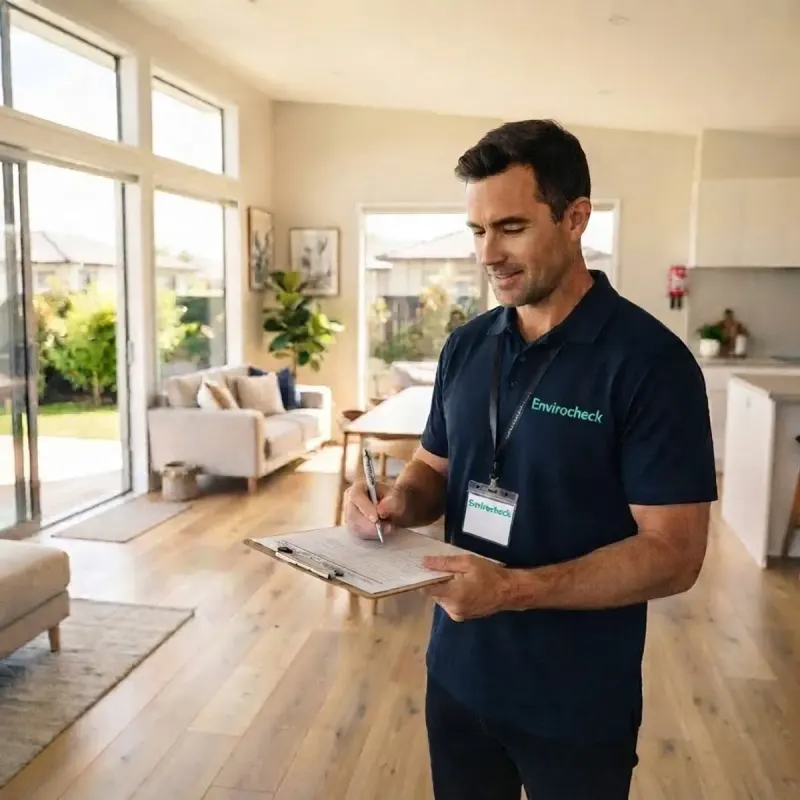
- A new assessment. Fresh sampling of the property as it stands today, commissioned by you, inside the due-diligence window. On a property with a known history, that usually means individual results per location rather than a composite. See pre-purchase meth testing.
If the property is going to auction there is no condition period afterwards, so the assessment has to happen beforehand — see meth testing before auction.
When the Property Has Been Repainted or Renovated Since Remediation
This is the detail buyers most often miss. If the interiors were repainted, relined or renovated after the clearance report, the surfaces named in that report may no longer exist. A fresh test then measures the new finishes, and the older documentation describes a property that has been altered. Ask for the sequence, and tell your assessor — the interpretation differs. Background on why is in painting over meth contamination and meth testing before renovations.
Questions to Put to the Vendor and Their Agent
- When was the contamination identified, and by whom?
- Which rooms and surfaces were remediated, and what was the method?
- Who carried out the clearance test, and were they independent of the contractor?
- What has happened at the property since — tenancies, works, repainting, relining?
- Are there records for every space, including garages, sleep-outs and any secondary dwelling?
Disclosure obligations and what a vendor must tell a buyer are legal questions — take advice from your lawyer rather than relying on any testing company's summary.
Cost and Timing of a Buyer's Assessment
A Baseline Screening Assessment starts from $249 + GST. On a property with a contamination history the useful scope is normally wider — more locations, individual results, possibly cavities — and is quoted before the visit. The on-site assessment typically takes 30 to 60 minutes; screening is normally reported within 24–48 hours and enhanced or detailed work in 3–5 working days. Tell us your condition date or auction date when you enquire so the booking is scheduled against it.
What the report will not do is promise that a lender will lend on the property, that an insurer will cover it, or that the purchase will complete. Those are decisions for those parties, made on the evidence you now hold.