NZQA Certified Samplers
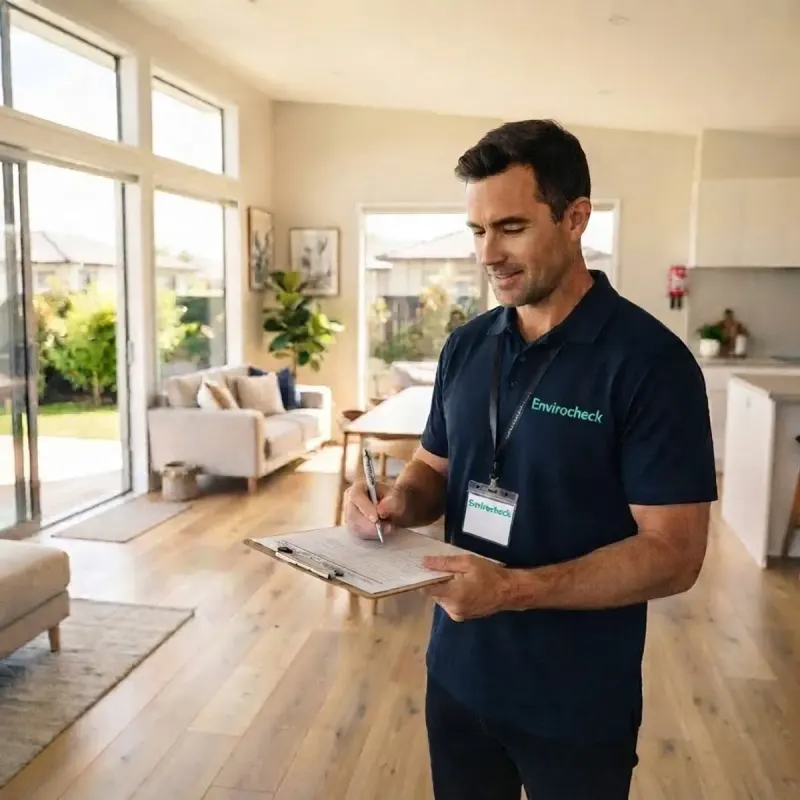
Surface-residue sampling carried out by certified samplers holding NZQA Unit Standards 30892, 30893 & 30894.
A renovation is the point where a property's history stops being recoverable. Walls come out, ceilings come down, carpets go, kitchens are stripped, surfaces are sanded and then covered. If a contamination question is going to be asked about the property, the cheapest and clearest moment to ask it is before that work starts.
Discover EnviroCheck in 15 Seconds
Independent meth sampling, accredited laboratory analysis, property risk intelligence and MethShield® protection — we collect the samples, independent laboratories analyse them.
Why Renovation Work Changes the Testing Question
Methamphetamine residue sits on surfaces and in the films and dust that accumulate in a building. Renovation disturbs exactly those surfaces. Sanding, gib removal, demolition and strip-out move material into the air and across rooms, and the property that a test would have described on Monday no longer exists by Friday.
There is also a practical exposure point. The people most exposed during a renovation are the trades on site — the builder, the sparky, the painter, the carpet layer. A pre-renovation assessment gives the owner something to act on before a crew is working in an unknown interior, rather than after.
Agree the Sampling Scope Before the Visit
The scope is the part owners most often leave vague, and it is the part that decides whether the report is useful six months later. Put these points in writing with the assessor:
- Which rooms and surfaces are included — and which are excluded, and why.
- Composite or individual results. A composite tells you whether residue was present in a group of locations; individual results identify each location. See composite versus individual sampling.
- Cavities and voids. If a ceiling or wall is coming out, sampling it before it goes is the only chance to record what was inside it. See ceiling cavity testing.
- Outbuildings and secondary dwellings. Garages, sleep-outs, shed conversions and farm accommodation are separate spaces with separate histories.
- What the report has to support. An insurance notification, a pre-sale pack, a tenancy record and a purchase negotiation each need a different level of evidence.
Document the Property as You Found It
Sampling locations should be photographed and marked on a plan, so the record shows where each wipe came from in the property as it stood on the day. Keep the pre-work report with the building consent documents, the contractor quotes and the invoices — that bundle is what answers the question later, whether it comes from a buyer, a lender, an insurer or a tenant.
If surfaces are being replaced rather than cleaned, keep the specification of what was removed as well as what went in. Where a property has already been repainted before the assessment, the interpretation issues are covered in painting over meth contamination.
If Contamination Is Found Before or During the Works
A result at or above the applicable threshold changes the order of work. The sequence that normally follows is: stop dust-generating activity and contain the area; establish the extent with a further assessment if the first test was a composite; have the decontamination carried out by a specialist contractor; then verify independently before renovation resumes or the property is re-let or sold.
Dry-sanding or dry-sweeping an affected area before it has been assessed is the step that turns a contained problem into a whole-of-house one. EnviroCheck tests and reports only and does not carry out decontamination, so the verification test is independent of the contractor who did the work. See after a positive meth test and meth clearance testing.
Verification After the Works
A post-work verification test re-samples the property in its finished state. It is a different job from a full screening: the plan targets the surfaces that were affected, the areas that were worked on, and any space where material may have travelled. For a landlord re-letting after a renovation, a pre-tenancy baseline taken after the works serves the same purpose — a documented starting condition for the next tenancy.
Timing, Cost and Realistic Expectations
A Baseline Screening Assessment starts from $249 + GST and covers the visit, surface sampling and a composite laboratory analysis. Larger properties, cavity sampling, multiple dwellings and individual results are quoted on the sample plan. The visit itself typically takes 30 to 60 minutes; screening is normally reported within 24–48 hours, and enhanced or detailed work in 3–5 working days. Book against your trade start date rather than after it.
One thing a report cannot do is certify the finished renovation as safe. It records what was sampled, where, when and at what concentration, and which threshold was applied. Areas not sampled were not assessed. Insurance acceptance and contractual outcomes are decisions for those parties and their advisers.